Short and Sweet
A serial killer is on the loose, a mysterious stranger moves in — and suddenly nothing is safe. Hitchcock as master of suspense: the wrongly accused man, the blonde in danger, the audience kept guessing until the very last scene…
The first truly personal Hitchcock film — and the beginning of a thriller legend.
Plot
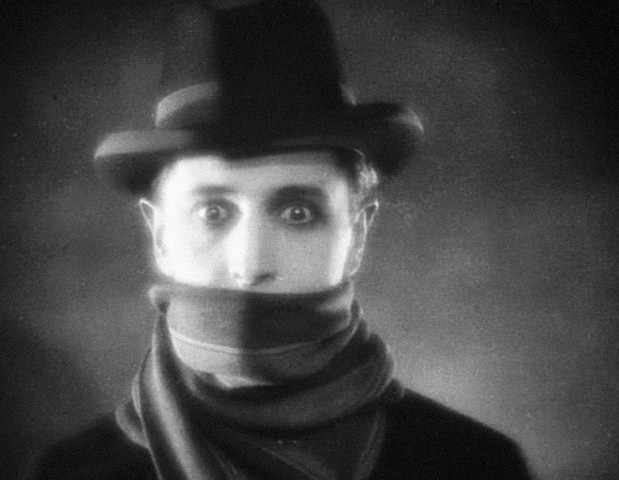
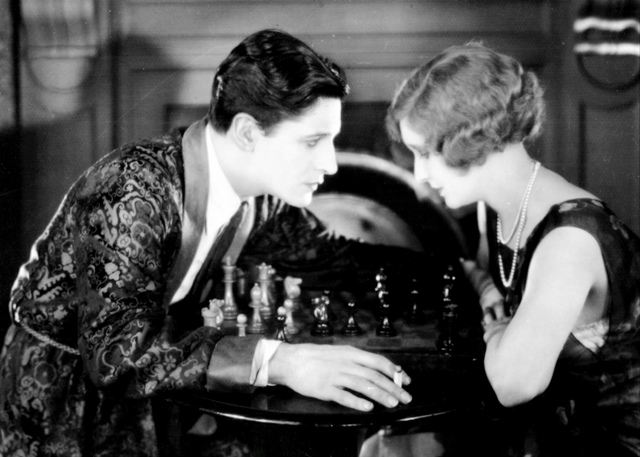
London is terrorised by the mysterious serial killer known as “The Avenger”, who murders only blonde women. Into the Bunting family’s boarding house moves a silent, pale young man (Ivor Novello) whose behaviour is deeply suspicious — he hides pictures of blonde women and disappears into the streets at night. Daisy’s fiancé Joe, a jealous police officer, makes him his prime suspect. Yet Daisy falls for the enigmatic stranger. Was he the killer — or himself a victim of fate? The audience is kept in the dark until the very end.
Production
Based on the novel The Lodger by Marie Belloc Lowndes (1913), itself inspired by the Jack the Ripper murders. Hitchcock originally wanted an ambiguous ending leaving the lodger’s guilt unresolved, but the studio refused to let their star Ivor Novello be seen as a potential murderer. The screenplay was adjusted accordingly. After an initial rejection by distributor C. M. Woolf, editor Ivor Montagu helped revise the film — reducing intertitles to a quarter of the original number. Hitchcock later admitted the film was better for it.
Hitchcock deploys visual tension throughout: expressionist lighting, skewed camera angles, and subjective perspectives. The famous glass-floor shot — showing the lodger pacing from below through a transparent ceiling — remains a landmark of silent-era filmmaking. Hitchcock himself called it his first “real Hitchcock film”. All his signature elements are already present: the wrongly accused man, the blonde in peril, the morally flawed detective, and an audience complicit in its own suspense.
Hitchcock-Cameo
Hitchcock appears briefly in a newsroom scene — one of his earliest cameo appearances, which would go on to become legendary. He didn’t include himself for artistic reasons, but simply because there weren’t enough extras on set.
Context
Hitchcock himself considered The Lodger his first true Hitchcock film. Every ingredient of his later work is already in place: the wrongly accused man, the blonde in danger, moral ambiguity, and the audience’s own complicity in suspicion. The press celebrated it as possibly the best British film ever made at the time of release. The novel has since been adapted multiple times, most notably in 1944 with Laird Cregar and in 2009. A key work in film history — and the birth of modern suspense cinema.